
 TechyTron
Rain Drop Alarm Kit
SKU: TT-SE-05-08
₹637.00
Includes 18% GST
Earn 6 reward points per unit. How rewards work
Detect droplets with a low-voltage sensing plate. Classes 5-6 · Ages 10–12. Complete electronics kit with an illustrated guide.
Delivery options
Courier from ₹79.00 per order · Free above ₹999.00
Product description
Classes 5-6, typical ages 10–12. Age ranges vary by learner. Guided low-voltage electronics.
Activity engagement
45–65 minutes. Explore 5–10 min · Build 15–20 min · Test and discuss 25–35 min. Estimated time for building, testing and discussion.
What you need
No computer required. An adult helps inspect connections.
Included components
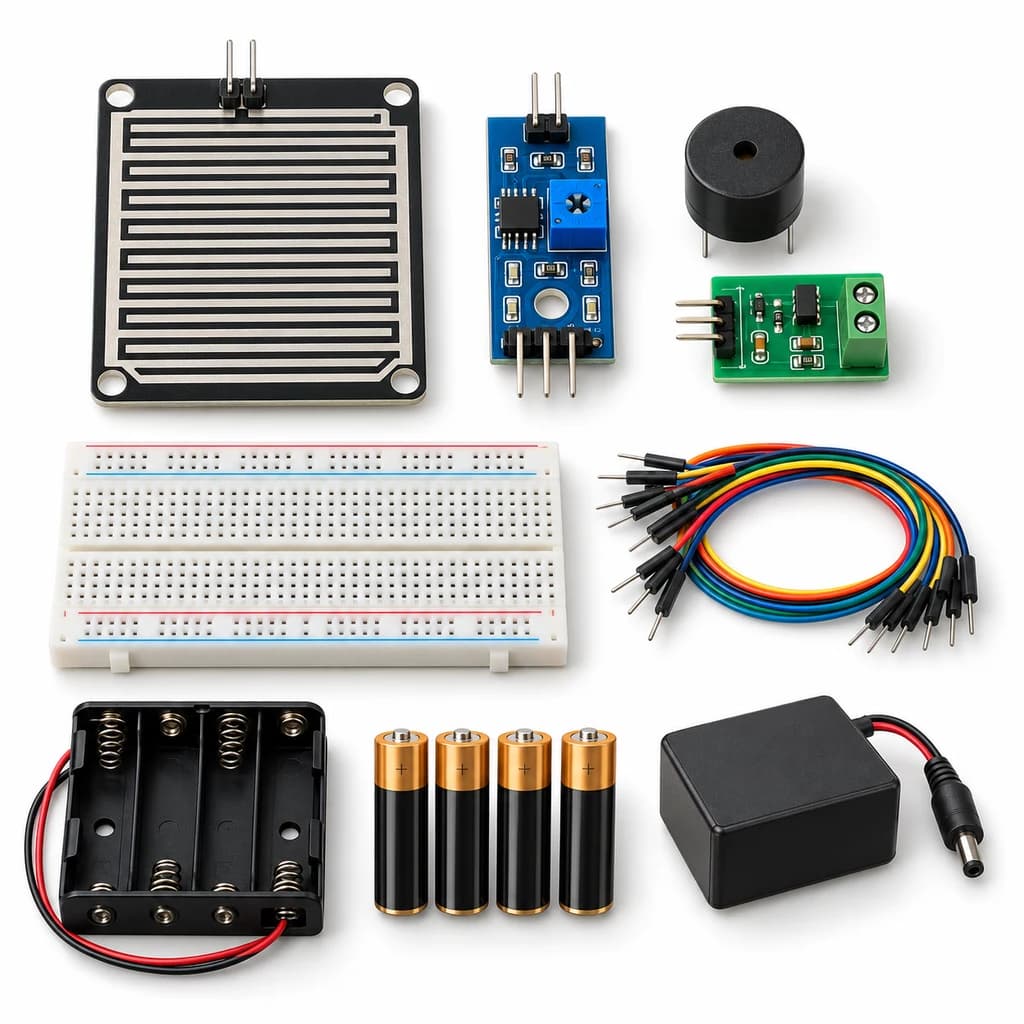
- Small Breadboard / Mini Solderless Board - 400 points — 1 breadboard
- Jumper Wire Combo - Male to Male, Male to Female and Female to Female Breadboard Connecting Wires (10 Qty Each) — 1 set
- Illustrated Activity Guide and Observation Sheets — 1 set
- Fitted Headers and Labelled Connection Leads — 1 set
- 4 CELL AA BATTERY HOLDER WITH SWITCH / COVER — 1 holder
- AA BATTERY — 4 battery (individual units)
- Regulated 5 V Power Supply with Short-Circuit Protection — 1 power supply
- Rain Drop Sensor Module — 1 sensor set
- 5 V Active Buzzer — 1 buzzer
- 5 V Sensor Output Driver with Trigger Selector — 1 interface circuit
What you learn
- Conductive moisture changes the plate resistance and can cross the selected threshold.
- A comparator turns a changing sensor signal into a digital threshold output.
- A separate output driver keeps the sensor signal separate from its load.
Connection guide
- rain sensor VCC/GND → regulated +5 V/GND; its labelled DO output → driver IN.
- Driver VCC/GND → the same supply; use its supplied active-low/high trigger selector to match the module.
- Buzzer positive → driver labelled load +; buzzer negative → driver labelled load −.
Steps to make it
- Disconnect all power and identify the supplied part labels and pinouts before wiring.
- Switch the supply off and identify the sensor DO terminal; do not confuse it with AO.
- Connect the sensor, preassembled labelled driver and output using the connection card.
- Power on and adjust the sensor sensitivity at the baseline condition until the output is stable.
- Place one drop, then three drops of clean water on the detached sensing plate; dry it between trials.
- Repeat five controlled trials, changing only one condition, then switch off and dry/clean the sensing surface as appropriate.
Test challenge
Place one drop, then three drops of clean water on the detached sensing plate; dry it between trials.
Observation task
Number of drops, plate condition, threshold setting and alarm state.
Expected result
Conductive moisture changes the plate resistance and can cross the selected threshold. The driver makes that change visible or audible.
If it does not work
Check the DO pin, shared ground, sensitivity setting and driver trigger selector. A brief sensor pulse gives only a brief output; this is not a latching alarm.
Try next
Compare spaced droplets with a thin continuous film using the same water.
Use and supervision
Use only supplied 5 V DC. Keep the breadboard, power unit and driver dry; only the removable probe/plate contacts the sample. Disconnect power before handling wet parts. Clean and dry after use. Adult guidance is recommended.
How this experiment works
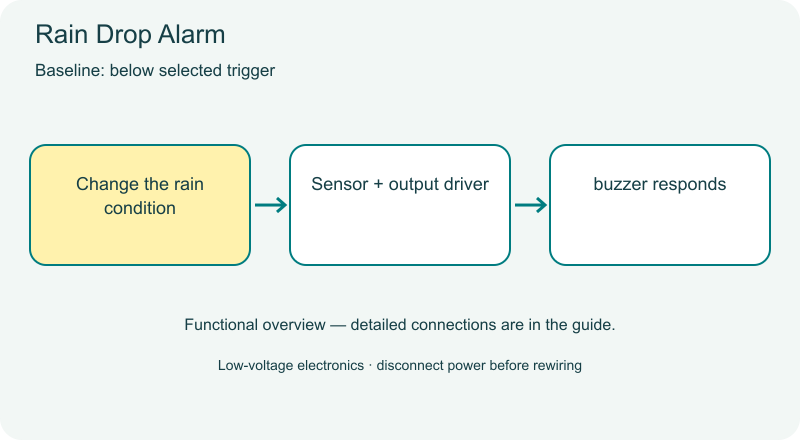
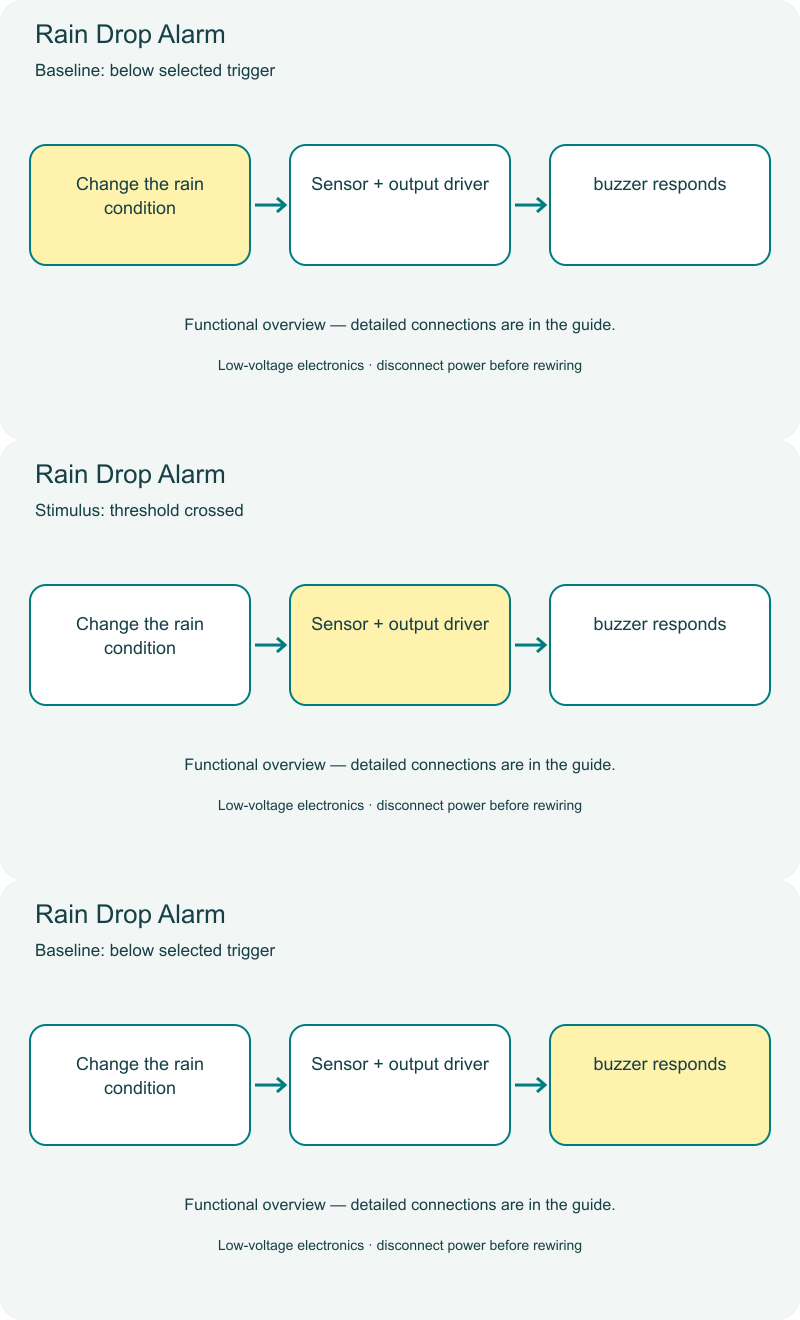
Cover illustrations show component types. Functional animations explain principles and are not recorded prototype tests. Follow the supplied connection labels and pinouts.
Customer feedback
Reviews
No published reviews yet. Be the first to share useful feedback.
Shop Related in this category
Related in this category
9 catalogue productsTechyTron TechyTron
Capacitor Countdown Kit
₹537.50Earn 5 points TechyTron
Heat Sense Alarm Kit
₹631.00Earn 6 points TechyTron
Soil Moisture Signal Kit
₹608.00Earn 6 points TechyTron
Sound Trigger Light Kit
₹609.00Earn 6 points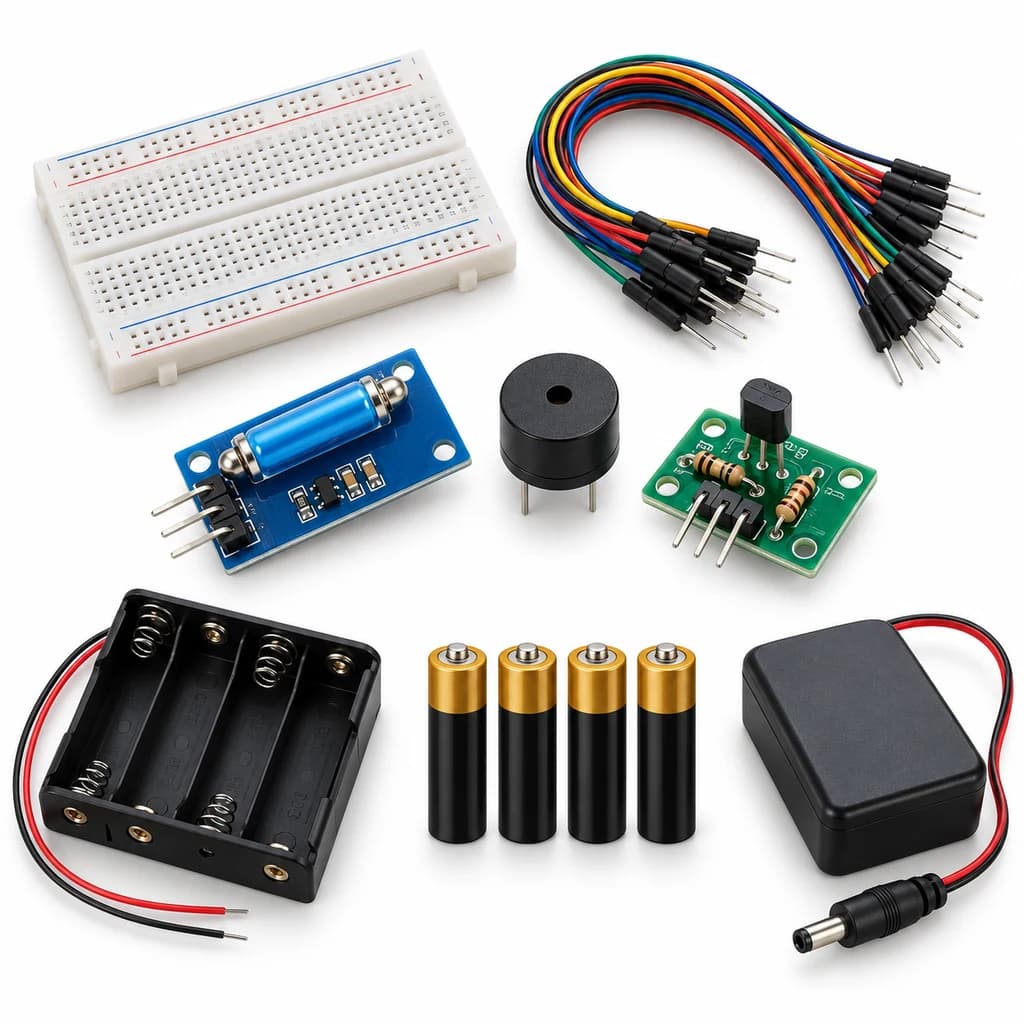 TechyTron
Tilt Alarm Lab Kit
₹631.00Earn 6 points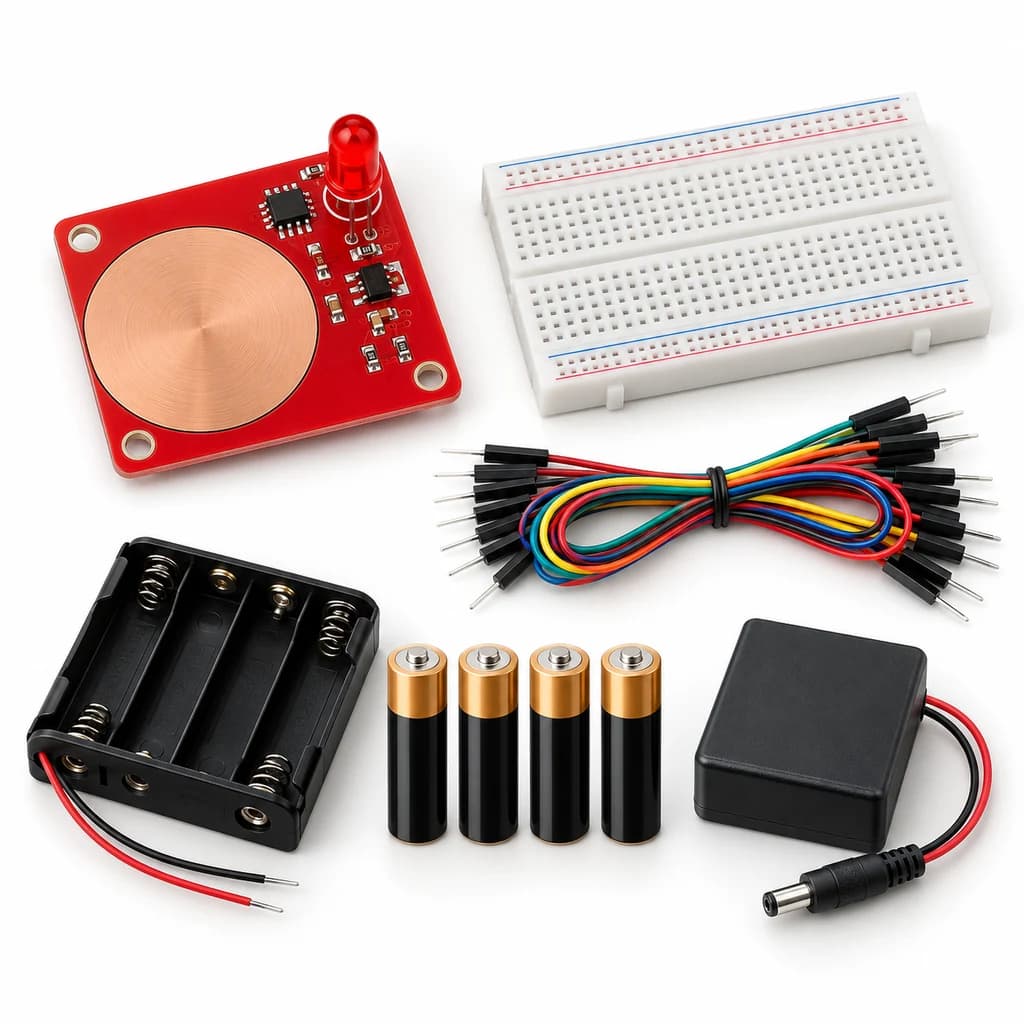 TechyTron
Touch Pad Light Kit
₹519.00Earn 5 points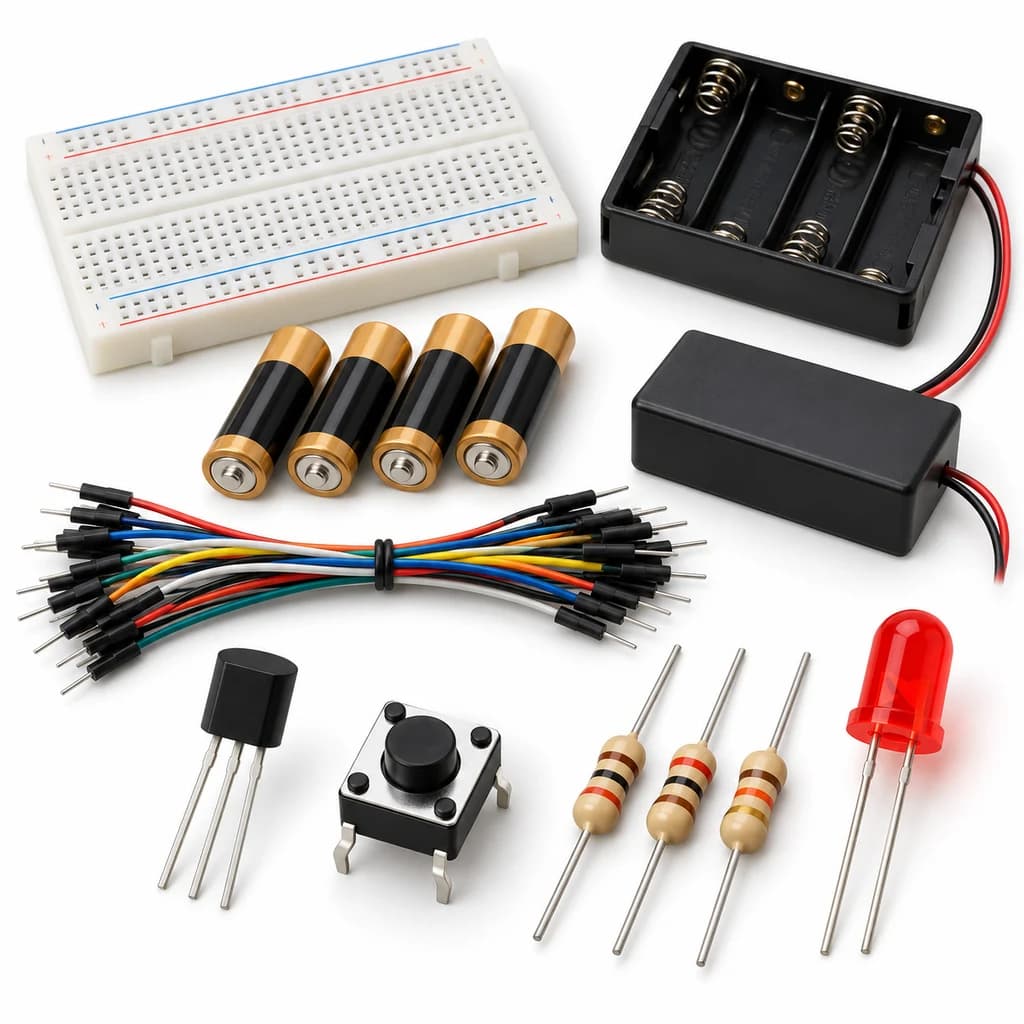 TechyTron
Transistor Light Switch Kit
₹521.50Earn 5 points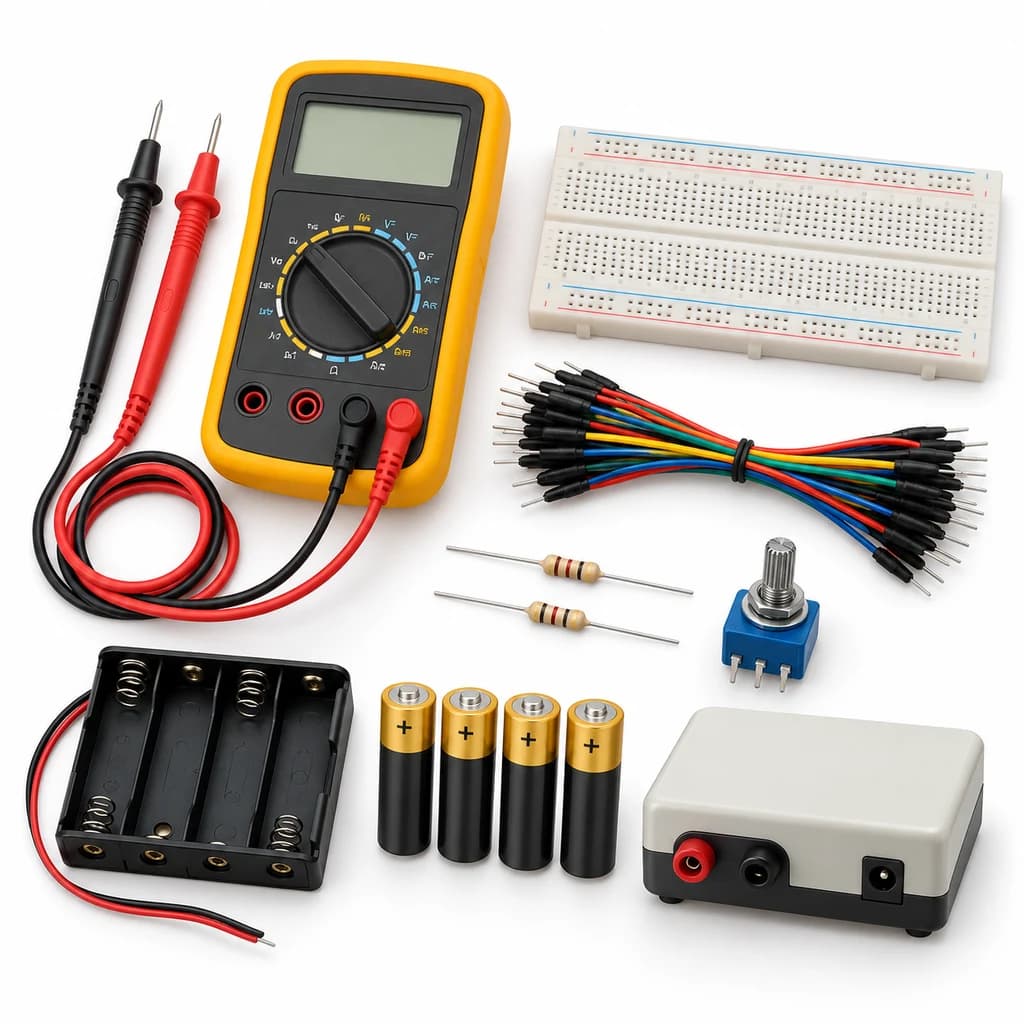 TechyTron
Voltage Explorer Kit
₹1,098.50Earn 10 pointsShop Related by product name
Related by product name
5 catalogue products GSM
1575 Mhz External Antenna for GPS/GSM with 3mtr cable
₹194.50Earn 1 points Sensor Modules
9 in 1 Arduino Sensor Kit - Ultrasonic, PIR, IR, DHT11, MQ2, LDR, Sound, Rain Sensor and Joystick
₹572.50Earn 5 pointsRAIN SENSOR
₹42.00Rain Drop Sensor Module
₹39.00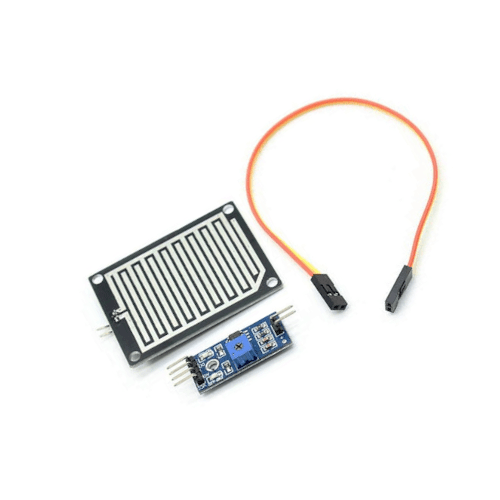 Agriculture & Water Sensors