
 TechyTron
Temperature Data Recorder Kit
SKU: TT-SE-09-01
₹1,001.50
Includes 18% GST
Earn 10 reward points per unit. How rewards work
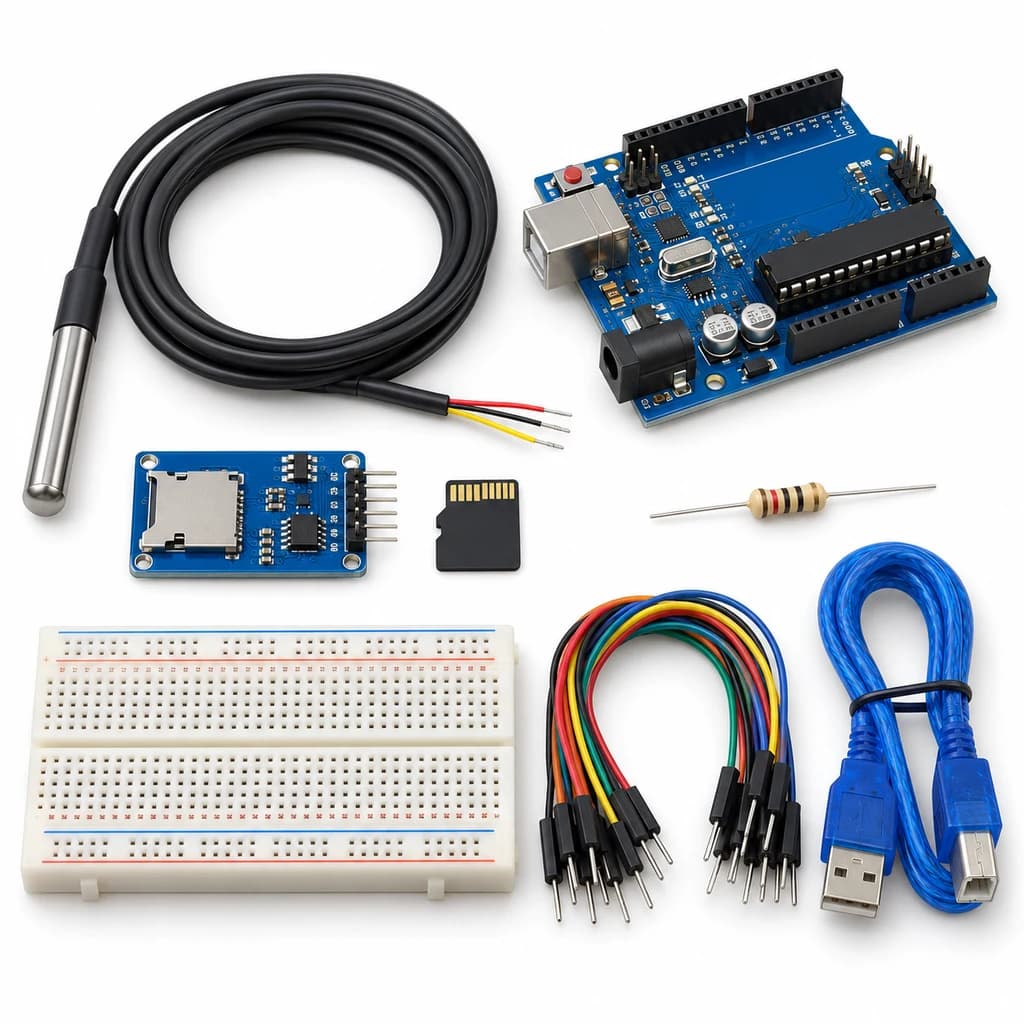
Save temperature readings as a CSV file on a memory card. Classes 9-10 · Ages 14–16. Complete electronics kit with an illustrated guide.
Delivery options
Courier from ₹79.00 per order · Free above ₹999.00
Product description
Classes 9-10, typical ages 14–16. Age ranges vary by learner. Guided low-voltage electronics.
Activity engagement
90–120 minutes. Explore 15–20 min · Build 30–40 min · Test and discuss 45–60 min. Estimated time for building, testing and discussion.
What you need
A computer with a USB port and Arduino IDE is required and is not included.
Included components
- Small Breadboard / Mini Solderless Board - 400 points — 1 breadboard
- Jumper Wire Combo - Male to Male, Male to Female and Female to Female Breadboard Connecting Wires (10 Qty Each) — 1 set
- Illustrated Activity Guide and Observation Sheets — 1 set
- Fitted Headers and Labelled Connection Leads — 1 set
- Arduino Uno R3 CH340G version compatible Arduino Development Board — 1 controller board
- USB A to B Programming Cable for Arduino Uno/ Arduino Mega — 1 data cable
- DS18B20 Water Proof Temperature Sensor Module — 1 probe
- Data Logging Shield for Arduino with SD card Interface and RTC — 1 logging shield
- 8 GB microSD Card with SD Adapter — 1 card set
- 4.7K Ω 1/4 Watts (10 PCS) — 1 resistor
- Micro SD Memory Card Reader for Raspberry Pi -Mini USB 2.0 — 1 USB card reader
What you learn
- Different digital buses can share one controller.
- A CSV file stores a sequence of measurements.
- Sensor and storage failures need explicit handling.
Connection guide
- Unpowered Uno: fit the SD logging shield, leaving its RTC battery socket empty. SD chip-select is D10; SPI uses D11/D12/D13.
- DS18B20 labelled VCC → 5 V; GND → GND; DATA → D2 with 4.7 kOhm pull-up to 5 V.
- Use the supplied microSD-to-SD adapter in the shield; format the supplied 8 GB card as FAT32.
Steps to make it
- Disconnect all power and identify the supplied part labels and pinouts before wiring.
- Format the card and insert it with power disconnected. Identify probe wires from their labels.
- Install the listed libraries; open and upload the supplied sketch.
- Record room temperature for three minutes, then hold only the metal probe tip in your hand.
- Disconnect USB before removing the card. Read TEMP.CSV through the included USB card reader and plot temperature against elapsed milliseconds.
- Change only the named parameter for the extension, repeat the controlled trials, save observations and disconnect power afterward.
Programming resources
Arduino IDE: select Arduino Uno and the USB port. Use the supplied USB data cable. Serial Monitor/Plotter: 115200 baud.
Libraries to install
- OneWire
- DallasTemperature
- SD (Arduino)
Test challenge
Compare room, hand-warmed and cooling segments; then test the error message with the card removed while power is off.
Observation task
Elapsed milliseconds, degrees C, segment label and any missing-sensor/storage messages.
Expected result
Valid temperature readings append to TEMP.CSV; timing is elapsed time since reset, not an RTC timestamp.
If it does not work
Check FAT32, shield CS D10, probe pin labels and the 4.7 kOhm pull-up. A USB card reader cannot replace the SPI logging shield.
Try next
Calculate the time needed for the warmed probe to return halfway toward room temperature.
Use and supervision
Use only the supplied low-voltage DC parts. Disconnect power before rewiring; check polarity and labelled pinouts. No soldering or exposed mains connections. Adult guidance is recommended.
How this experiment works
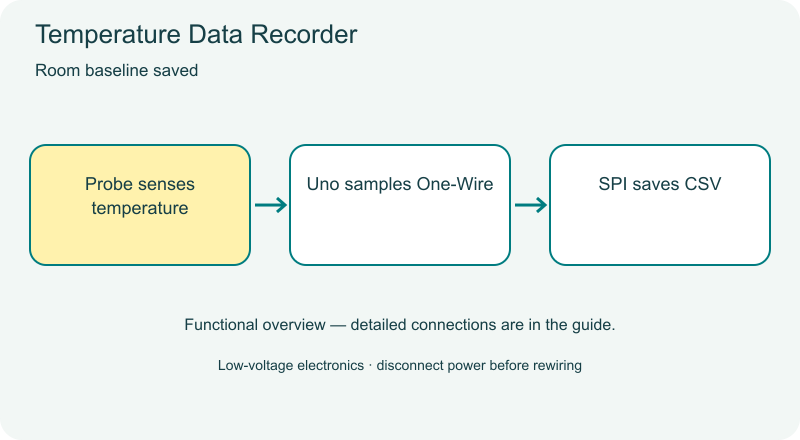
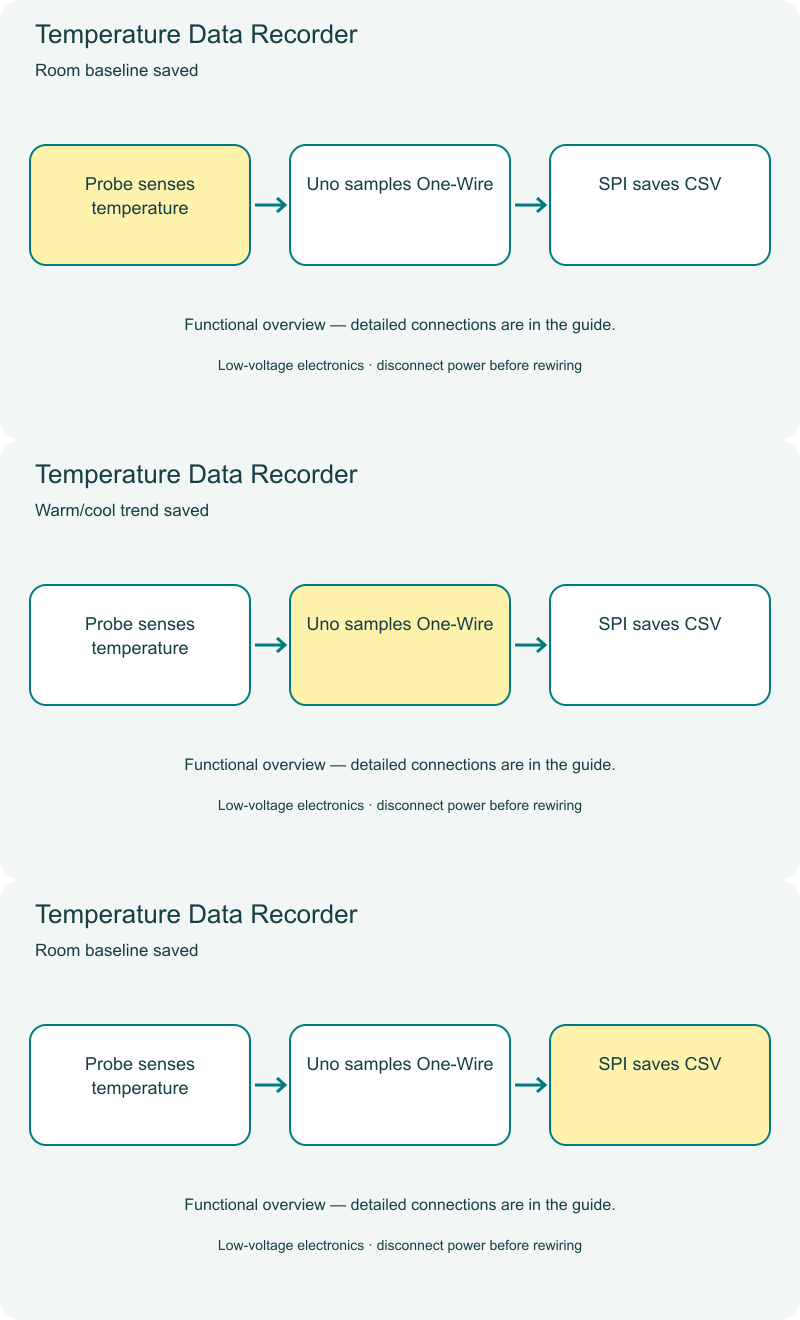
Cover illustrations show component types. Functional animations explain principles and are not recorded prototype tests. Follow the supplied connection labels and pinouts.
Customer feedback
Reviews
No published reviews yet. Be the first to share useful feedback.
Shop Related in this category
Related in this category
9 catalogue productsTechyTron TechyTron
Motion Event Alarm Kit
₹521.00Earn 5 points TechyTron
OLED Weather Dashboard Kit
₹833.50Earn 8 points TechyTron
Optical Speed Lab Kit
₹523.50Earn 5 points TechyTron
Precision Voltage Monitor Kit
₹1,137.50Earn 11 points TechyTron
RFID Access Indicator Kit
₹593.50Earn 5 points TechyTron
Smart Streetlight Control Kit
₹441.50Earn 4 points TechyTron
Tilt and Acceleration Logger Kit
₹702.00Earn 7 points TechyTron
Water Level Display Kit
₹776.00Earn 7 pointsShop Related by product name
Related by product name
10 catalogue products Glue Guns & Sticks
Hot Melt Glue Gun - 40W
₹193.50Earn 1 points Glue Guns & Sticks
Hot Melt Glue Gun - 60W
₹242.00Earn 2 points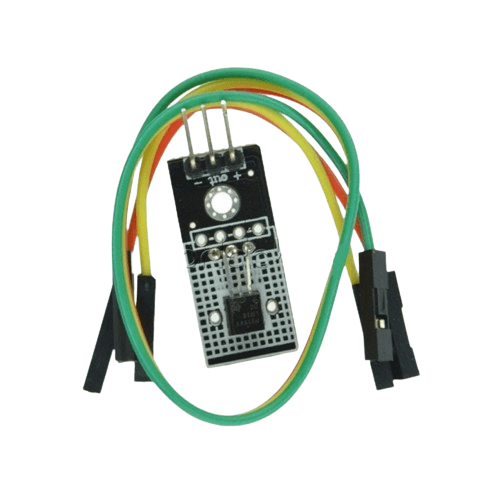 Other Temperature/Humidity Sensors
LM35D Analog Temperature Sensor Module
₹73.00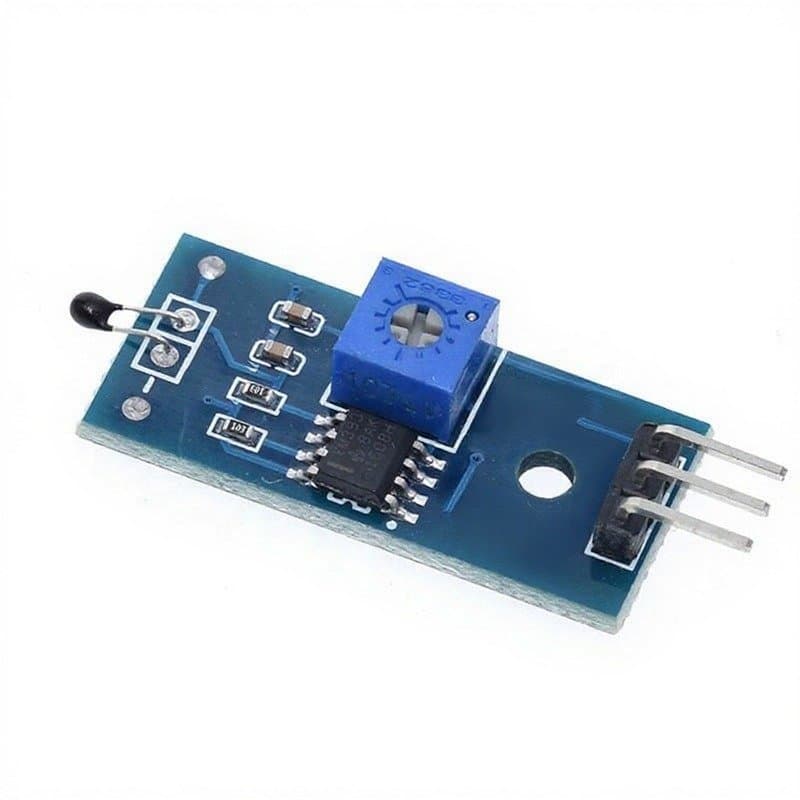 Components
NTC Thermistor Temperature Sensor Module
₹34.00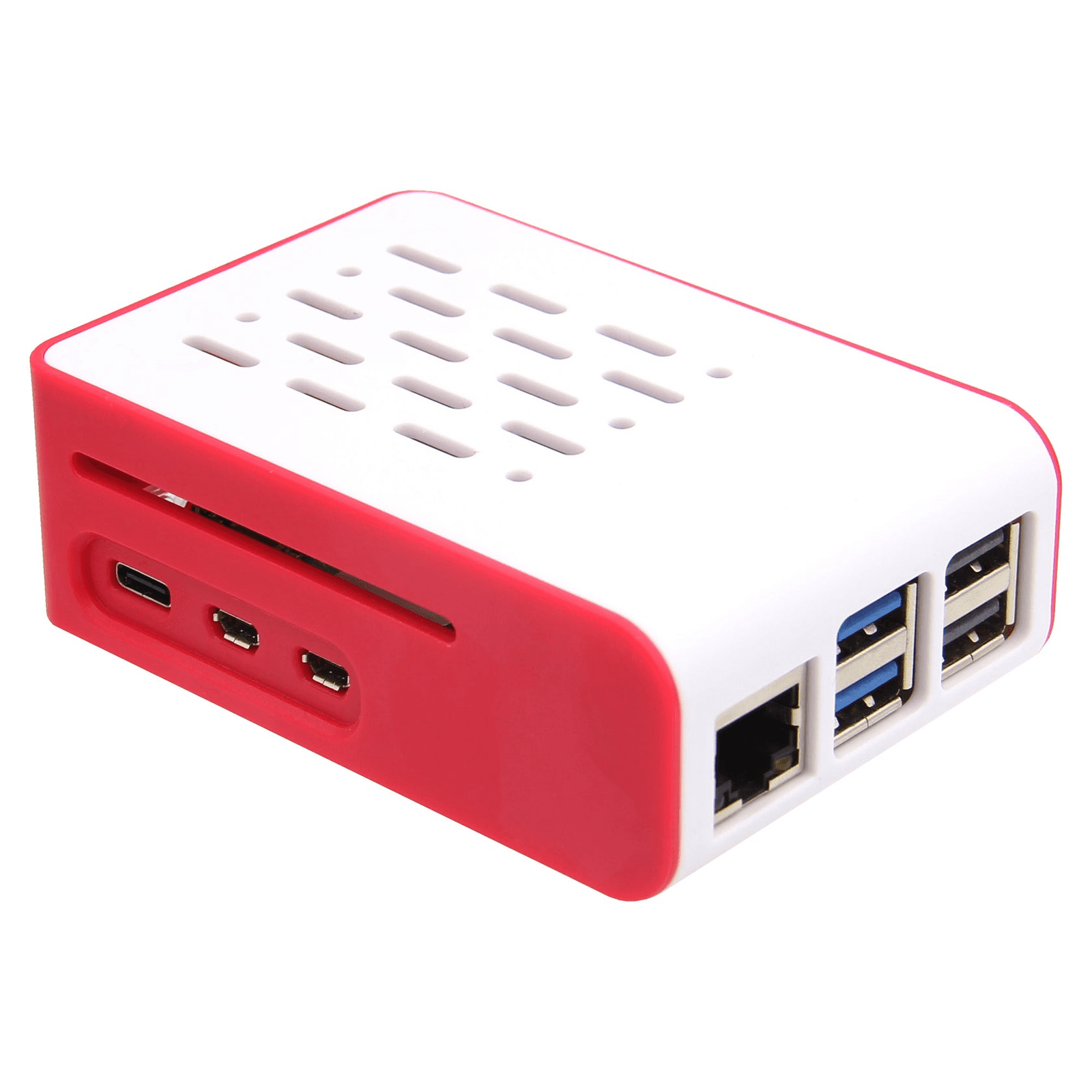 Other Raspberry Pi
Raspberry Pi 5 Case with Active Cooler – Red/White ABS Enclosure
₹684.50Earn 6 points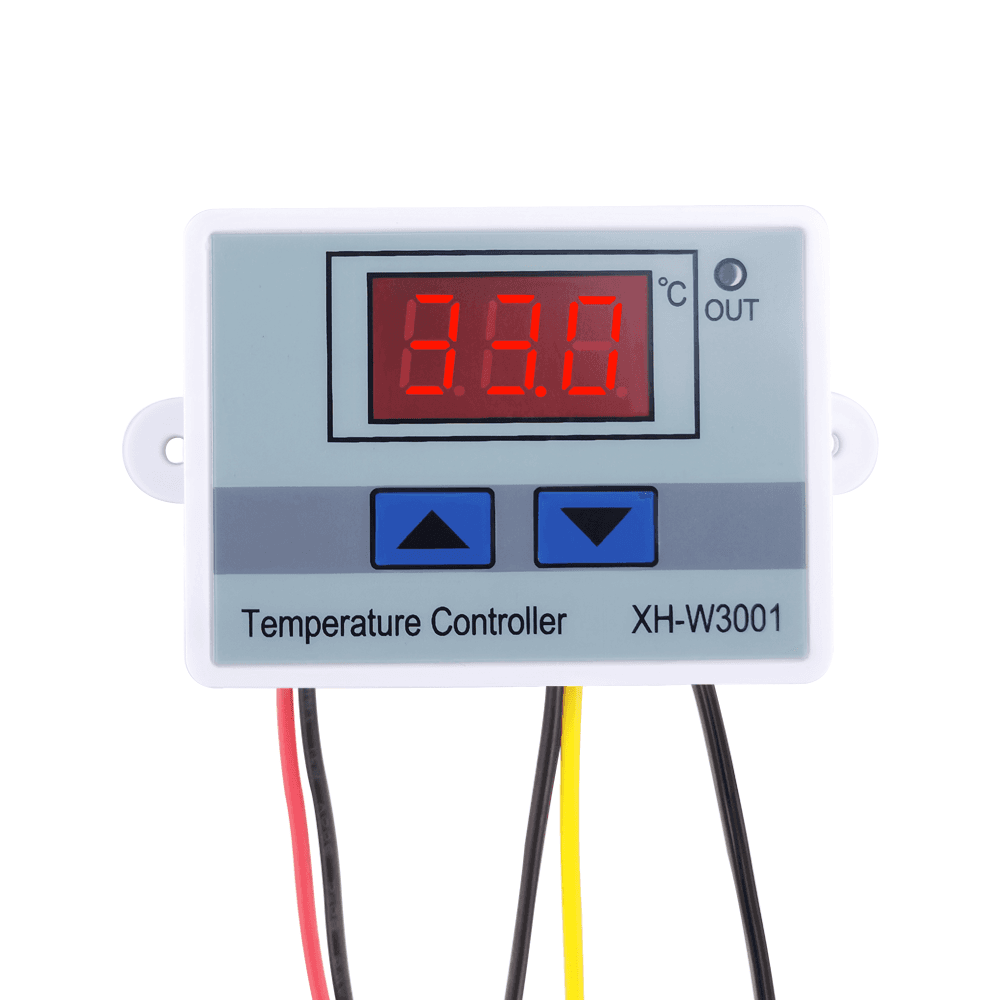 Temperature Controller Modules
XH-W3001 AC 220V 1500W Digital Temperature Controller Microcomputer Thermostat Switch
₹159.50Earn 1 points Power Modules
12V 1A DC Power Adapter
₹156.00Earn 1 points Batteries, Power Supplies & Accessories
12V 2A Led Strip Power Supply for 5050 Led Strip
₹297.50 Batteries, Power Supplies & Accessories
4S 10A Battery BMS Module with Connector for LFP Cells
₹240.50 Other Temperature/Humidity Sensors